
Last updated November 14, 2026
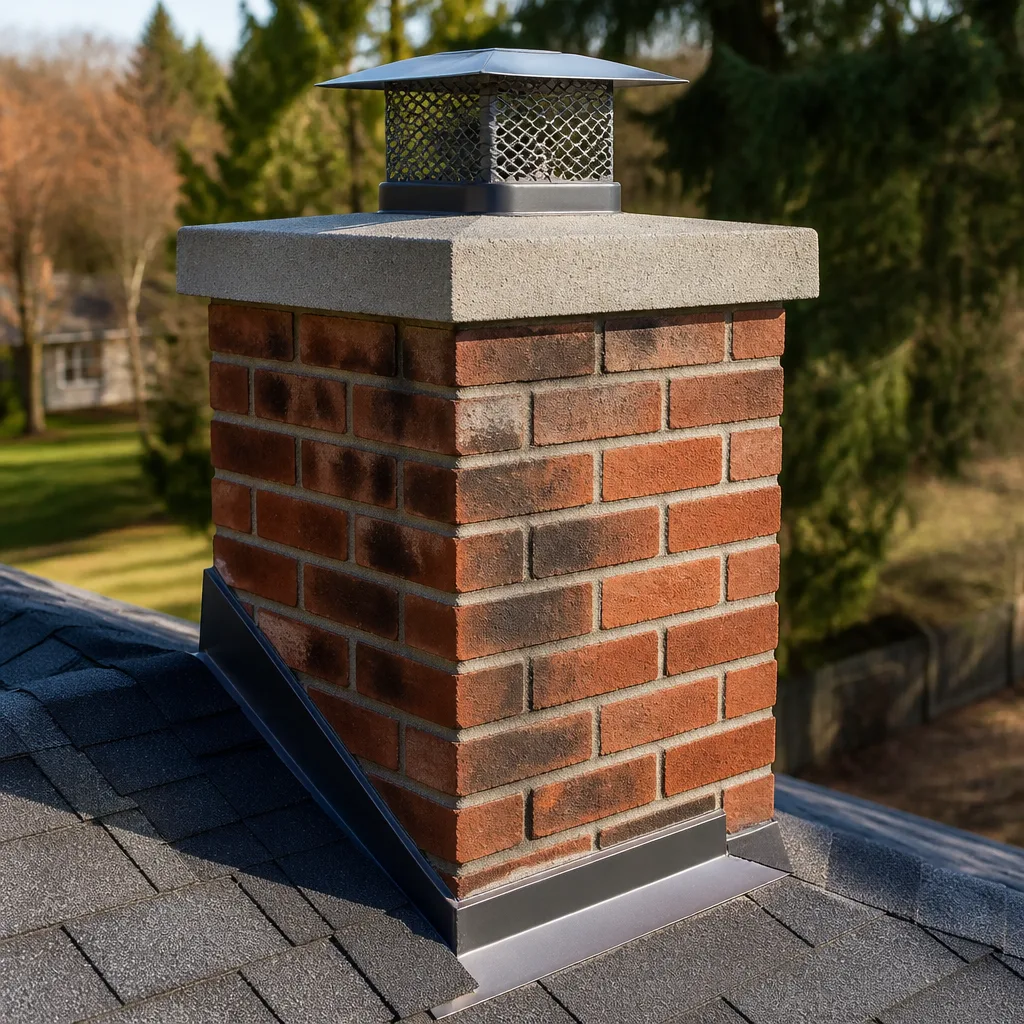 Sweep & inspection
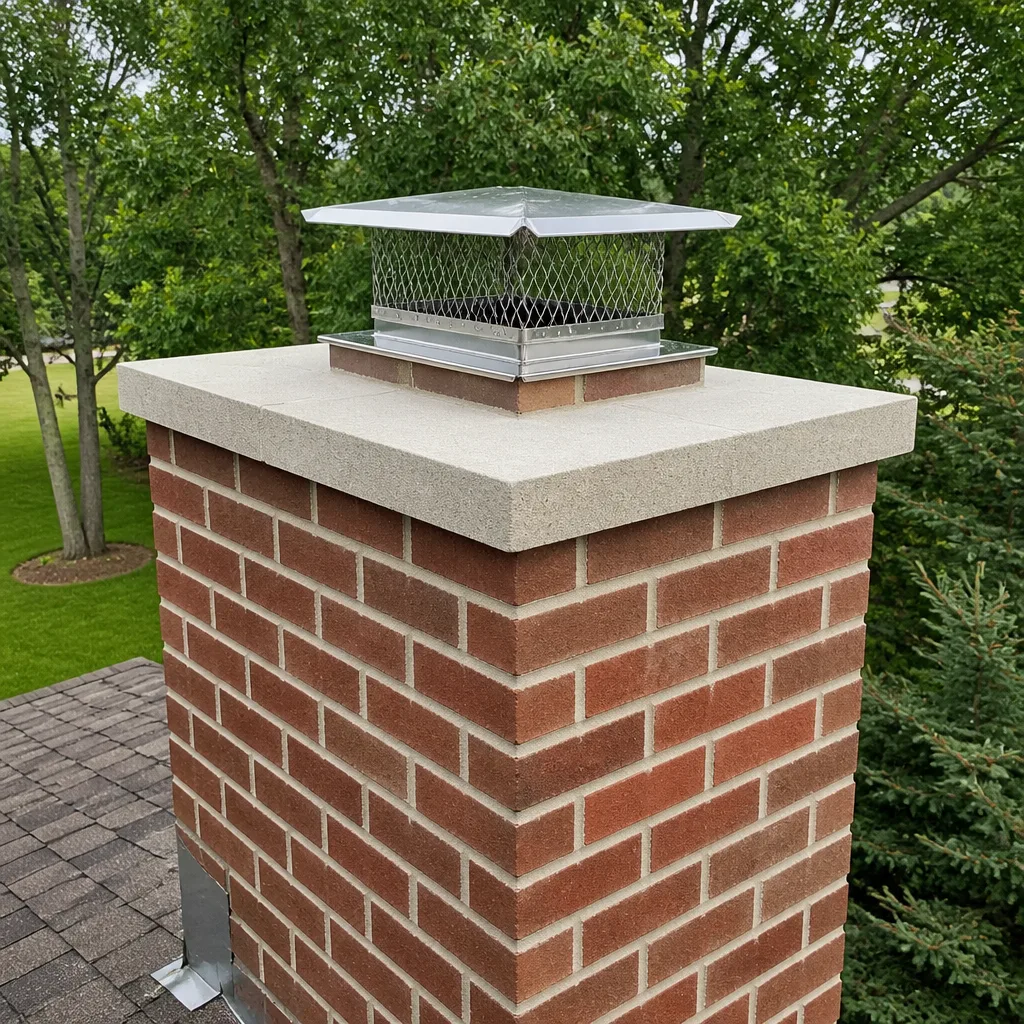 Caps & crowns
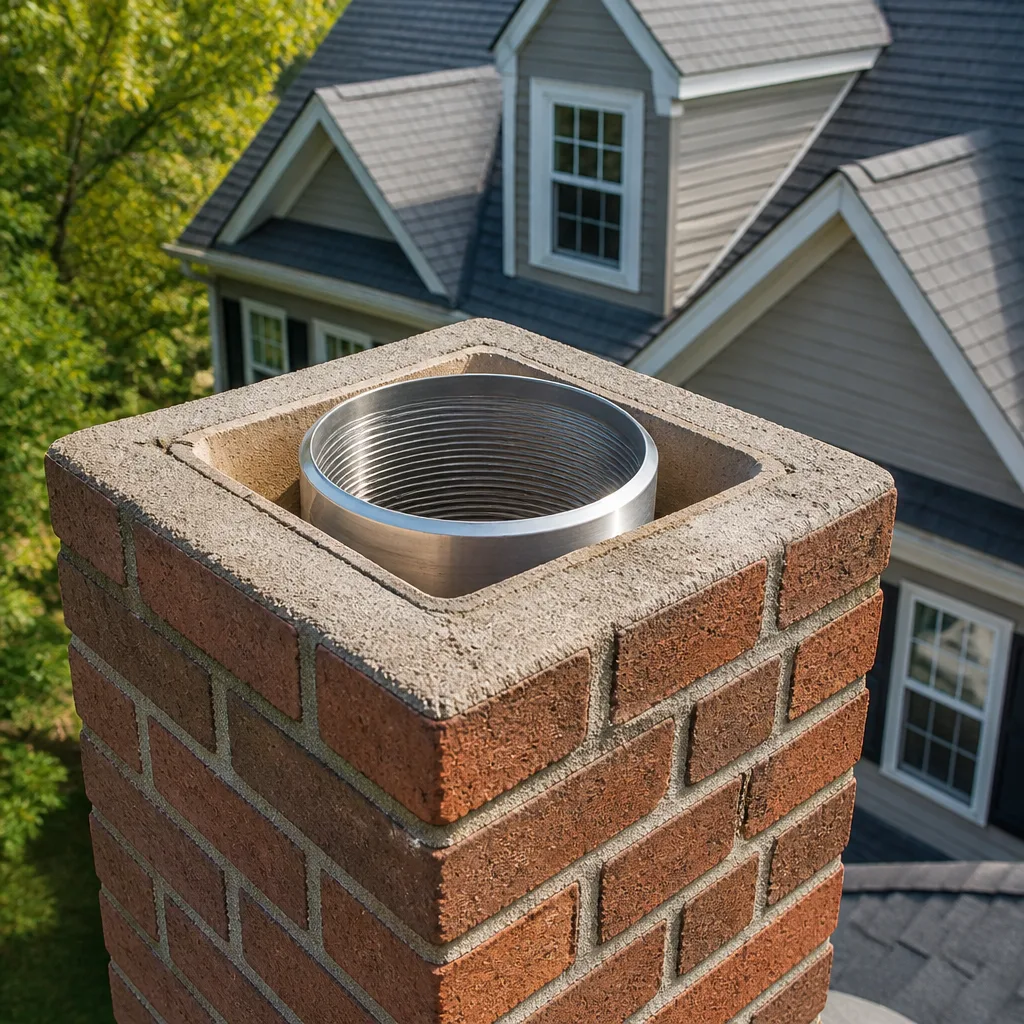 Flue relining
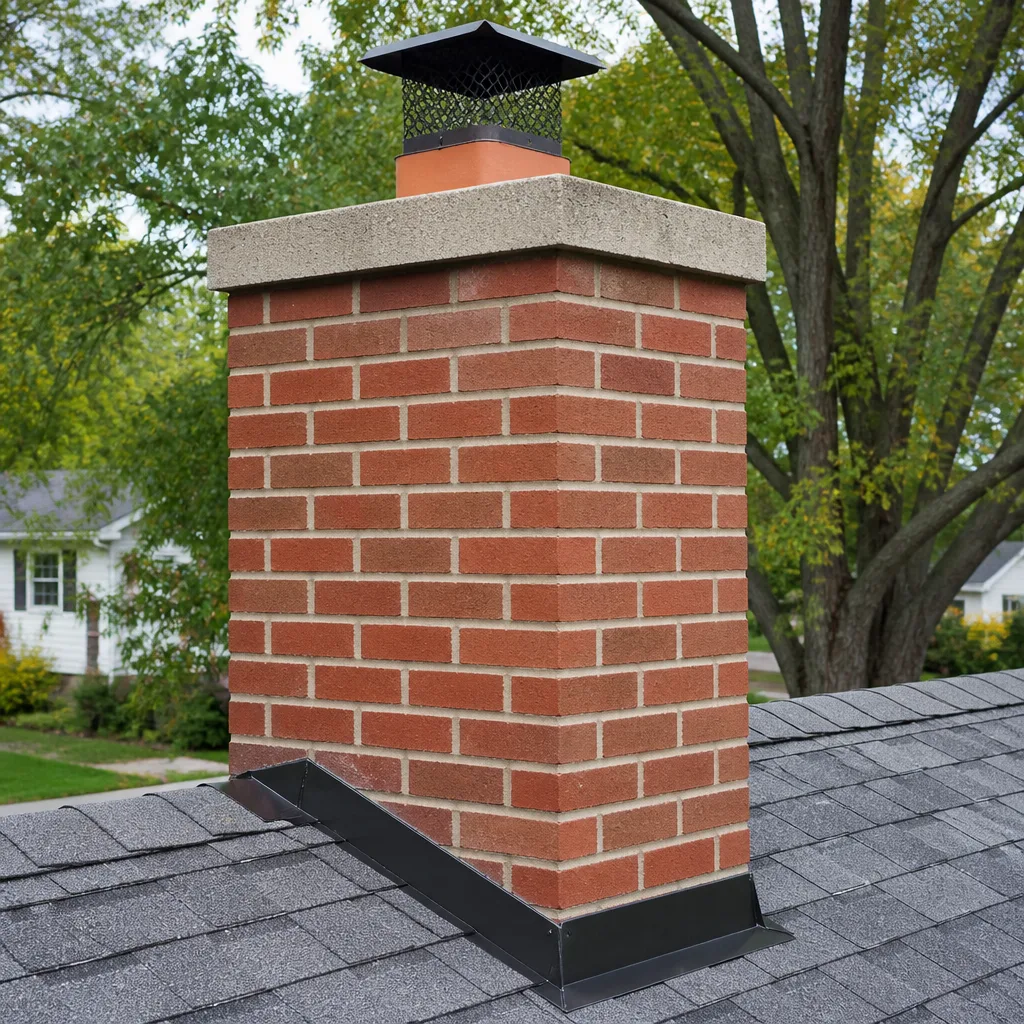 Masonry repair
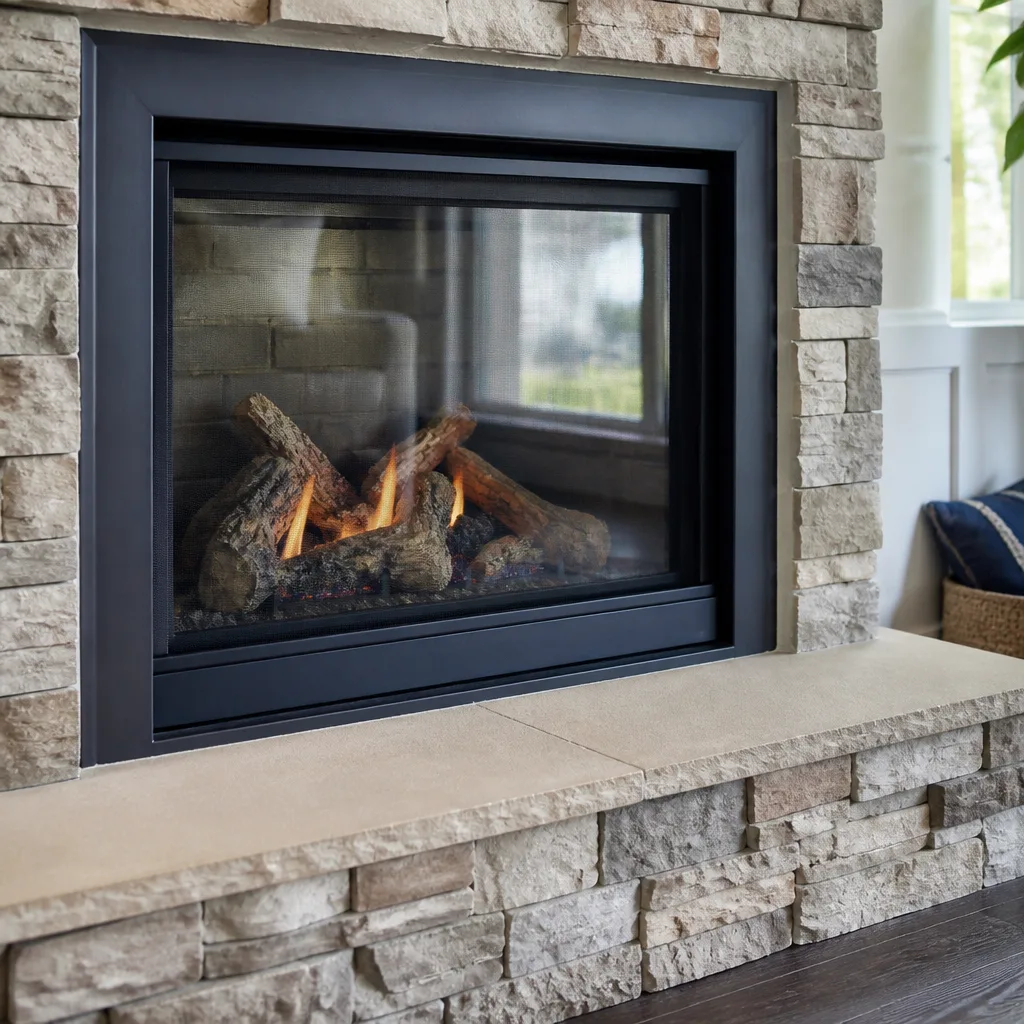 Gas fireplace service
Level 1 sweep and inspection to the NFPA 211 annual standard - flue, crown, cap, and flashing checked and photographed
Chimney sweep logs do not sweep chimneys. They loosen some creosote - which then falls where a brush and vacuum still have to collect it.
Chimney Cleaning Warning Signs: A Midland Homeowner’s Reference Guide
Smoke backing into your room isn’t a warning sign. It’s the system already failing. The real warnings showed up two or three fires earlier, in the way the fire drew on a cold evening, in the smell that lingered after you shut the damper, and in the pattern of residue on the firebox back wall. Most homeowners miss those early indicators because nobody ever told them what to look for. This guide maps them: the draw problems, the smell profiles, the exterior staining, and the dryer vent clues that show up weeks or months before an emergency forces the call. We’ve watched Midland homeowners catch these signals early and skip the expensive part entirely.
Quick Answer
The earliest chimney cleaning warning signs are sluggish fire startup, a tar-like or acrid smell after shutdown, dark residue creeping up the firebox back wall, white staining on the exterior chase, and a damper that sticks instead of swinging freely. None of these mean your chimney is about to catch fire. They mean creosote has built past the stage where a routine sweep clears it easily. Acting on them in Midland costs far less than waiting for the smoke-in-the-room stage, when the problem has usually moved from cleaning into repair.
Styles & brands we work with
- Sweep & inspection
- Caps & crowns
- Flue relining
- Masonry repair
- Gas fireplace service
Table of Contents
- What Your Fire’s Draw Is Telling You
- The Smell After Shutdown: Reading Creosote Stage by Stage
- Residue Patterns on the Firebox Back Wall
- Exterior Efflorescence and What It Says About Cap Seal
- Damper Corrosion in Midland’s Alkaline Dust
- Dryer Vent Crossover Signs Before Full Blockage
- Common Mistakes to Avoid
- When to Call a Professional
What Your Fire’s Draw Is Telling You
Draw problems split into two categories that look similar at the fireplace but come from completely different causes. A fire that struggles to catch at startup is usually fighting a cold flue or a partial blockage. A fire that draws fine for twenty minutes and then reverses mid-burn is usually fighting a pressure problem, poor cap performance, or an undersized flue for the appliance. The urgency differs too: startup sluggishness usually waits for a scheduled sweep, while mid-burn reversal is a sign something needs inspection before the next fire.
Cold flue startup is the most common and least serious. A chimney that hasn’t run since last season holds a column of dense cold air. The first fire of the evening pushes against that column before the flue warms and the draft establishes. You’ll notice smoke curling at the damper for the first few minutes, then clearing. That’s normal behavior in a cold chimney, and it gets noticeably worse as outside temperatures drop in Midland’s winter months, which is exactly when homeowners notice it and worry.
Blockage behaves differently. The fire catches but burns lazy. The flame is soft, the wood blackens before it burns through, and the smoke never quite clears the firebox lip. A nest, a collapsed flue tile chunk, or a heavy creosote shelf can all do this. What separates it from cold flue is consistency: a cold flue clears once warm, while a blockage stays sluggish the whole burn, every burn, no matter how long the fire has been going.
Mid-burn reversal is the one to take seriously. The fire draws, the flue warms, everything seems fine, and then smoke spills into the room partway through. Possible causes include:
- A flue undersized for the appliance you’re running
- A cap or spark arrestor partially clogged with debris
- Pressure changes from a kitchen or bath exhaust fan pulling air up the house
- A stack too short for the roof line around it
- Wind-driven downdrafts, which Midland’s open terrain produces frequently
Only an inspection separates those causes. Reversal plus a strong creosote smell is a sweeper’s call. Reversal with no creosote signal and a clean cap often turns out to be pressure or flue sizing, which is a different conversation. Booking a chimney sweep with a camera inspection answers which one you’re dealing with before you spend anything on parts.
The Smell After Shutdown: Reading Creosote Stage by Stage
Creosote announces itself by smell long before it becomes visible in the firebox. The specific smell tells you which stage has built up, and different stages need different cleaning methods. A tar-like, heavy, almost sweet-burnt odor points to stage two creosote: a glazed, crusted layer that a standard brush will skate right over. An acrid, sharp, acetone-like smell points to stage three: hardened, glazed creosote that has essentially fused to the flue wall and requires a chemical sweep or resurfacing.
Here’s why the distinction matters practically. Stage one is soot and light flake, and a routine sweep clears it. Stage two is the sticky crust that forms when smoke condenses on a cooler flue surface and then bakes. Brushing alone doesn’t remove it. It takes a rotating sweep head, a chemical treatment, or in severe cases a resurfacing product. Stage three is a hard glazed shell that can’t be brushed at all, and it’s the layer most associated with flue fires because it releases combustible gases when heated.
How homeowners read their own smell profile:
- After the fire dies and you close the damper, wait until the firebox is cold. Then open the damper and lean in.
- Light soot gives you a dry, dusty, faint smoke odor. Nothing to act on beyond your regular sweep schedule.
- A tar-like, sweet-burnt smell is stage two. Book a cleaning with a sweep who carries chemical treatment, not just brushes.
- An acrid, sharp, almost solvent smell is stage three or close to it. Ask for a camera inspection before the next fire.
- A smell that follows you into the room after shutdown, lingering hours later, means smoke is escaping back into the living space. That’s a flue or damper seal issue, not just creosote.
- An ammonia or damp-plaster smell with no creosote signal usually points to water entry through a cap or crown, which is a repair, not a cleaning.
We’ve seen homeowners skip the smell step entirely and go straight to the visible sign, which is always later. The nose is the earliest sensor you have. If you can name the smell accurately, you can usually name the stage before you ever call anyone. It also lets the sweep bring the right material on the first visit. A stage two job needs different equipment than a stage one job, and knowing the difference keeps you from a second visit.
Residue Patterns on the Firebox Back Wall
The residue on your firebox back wall is a map of how smoke has been moving through the system. Read it correctly and you’ll know whether your problem is at the throat, the flue, or the cap. It’s the cheapest diagnostic you have, and almost no homeowner knows to look at it.
Even, sooty black buildup across the whole back wall is normal for a working fireplace. It means smoke is rising uniformly and leaving a light deposit. That’s a sweep-cycle signal, not a problem.
Uneven buildup tells you something. If the residue is heavier on one side, smoke has been favoring that side, which usually points to a throat damper that isn’t sealing squarely or a flue that runs off-center from the firebox. If the residue is heaviest at the top of the back wall and thins toward the floor, the smoke is pooling at the top before it exits, a classic sign of an undersized or partially blocked flue. If the residue is heavy at the bottom and light at the top, the fire has been running too cool, which means poorly seasoned wood or a weak draft from the start.
What the patterns mean for a Midland homeowner:
- Uniform black soot: normal, sweep-cycle signal.
- Side-heavy buildup: damper or flue alignment issue, worth a visual check.
- Top-heavy buildup: flue blockage or undersizing, call for inspection.
- Shiny black glaze in the residue: stage two or three creosote on the firebox surface itself, chemical sweep needed.
- White or light gray streaks mixed in: likely moisture, check the cap and crown on the roof.
- Rust-colored stains: water is reaching the metal, cap or flashing repair territory.
Look at this pattern once a season, in daylight, with a flashlight aimed at the back wall from the firebox opening. Photograph it if you can. The pattern you see in October tells you how the summer humidity and last winter’s fires treated the system, and comparing the same photo year over year gives you a baseline no sweep can guess at from a single visit. If a pattern changes direction or intensity between seasons, that’s your earliest warning sign yet.
Exterior Efflorescence and What It Says About Cap Seal
Efflorescence is the white, powdery, chalky staining that appears on masonry surfaces. On a chimney chase, it’s a sign moisture is moving through the brick and pulling mineral salts to the surface as it evaporates. In Midland, that’s almost always wind-driven rain finding a way in through a compromised cap, a failing crown, or a hairline crack in the chimney’s masonry, then migrating into the structure when the wind pushes rain sideways at low angle during one of our storm cells.
The early-stage reading is simple. A small patch of white bloom on the chase, discovered before it spreads, is usually a cap issue, and that’s the cheap fix. The cap is the only component that stops rain entering the flue from the top. A cracked or missing cap, or a cap set loosely on the flue tile, lets water run directly down the inside of the chimney. From there it works into the mortar joints, saturates the chase, and eventually shows up as efflorescence on the exterior face. By the time the bloom is broad and starting to spall the brick face, the moisture has been in the structure for at least a season, often longer.
What to check and when to call:
- From the ground with binoculars, look at the top of the chase. A missing or tilted cap is a visible warning sign from below.
- Look for white powdery bloom below the chase top, especially on the north and west faces, which catch the most wind-driven rain here.
- Feel the bloom. A chalky powder that rubs off easily is early efflorescence. Hard, crystalline crust or crumbling brick face is late-stage and needs a closer look.
- Check for rust-colored streaks on the cap itself, which usually point to a failed unit.
- If you can safely access the roof edge without stepping on the roof, look for a cracked mortar crown. Never step onto a steep or damaged roof for this.
The fix on early efflorescence is usually a new cap, set properly, using a trade-grade product. We install Gelco chimney caps for exactly this reason: a good cap is the cheapest moisture control in the whole system. What happens when the efflorescence is ignored is more expensive. Moisture in the masonry encourages spalling, the brick face flakes, and the chase looks worse than it needs to. Catching it in its first season, when the cap is the only problem, changes the cost entirely.
Damper Corrosion in Midland’s Alkaline Dust
A damper that sticks is not a quirk. In Midland’s alkaline dust conditions, it’s an early indicator of what happens when fine mineral dust settles on the damper plate, mixes with moisture, and gradually binds the hinge. Homeowners usually notice the sticking long before the damper fails, but they treat it as normal wear. Correct that instinct. A sticking plate is the day the damper starts to fail, and the repair is small at that point.
The damper plate lives in one of the toughest environments in the house. It sees heat from below, moisture from above, and everything Midland’s air carries, which in this part of Texas means alkaline mineral dust that settles onto every horizontal surface it can reach. That dust accumulates on the damper edge and the hinge pin. Add the smallest bit of moisture from a humid summer or a rain-driven downdraft, and the dust becomes a paste. The paste dries hard. The damper starts to resist. You push harder to open it. Eventually, the plate warps slightly, or the hinge pin wears oval, and the damper no longer sits square.
What to check this season:
- A plate that takes noticeable pressure to open or close is in the early sticking stage.
- A plate that opens easily but doesn’t sit flush when closed is starting to warp at the hinge.
- A plate with visible crusty deposit along the edge needs cleaning, not lubrication alone.
- A plate that vibrates or rattles when the fire burns indicates wear at the hinge pin.
- A plate with a gap you can see daylight through when closed means the seal is lost. Smoke and heat escape up the flue even when the damper is shut, which drains fireplace efficiency and lets creosote build on a cold flue.
Clean the damper edge and hinge each season with a stiff brush. Avoid household oil on the hinge, which attracts more dust. If the plate is already warped, sticking badly, or won’t seal, it needs replacing with a proper damper, and that’s a job for a sweep. We stock Olympia Chimney and Copperfield dampers, and a properly fitted unit turns a sticking plate into a smooth one and restores the seal that draft loss has been eating for a season. In Midland, where the dust load is constant, that cleaning habit is the difference between a small maintenance task and a mid-season repair when the damper quits.
Dryer Vent Crossover Signs Before Full Blockage
The dryer vent is the crossover warning zone for the whole system. The signs of a partially blocked dryer vent overlap with the early signs of a chimney problem, and in many Midland homes both are compromised at the same time because the same conditions, alkaline dust and wind, affect them. The American fire-safety record for dryer vents is well established: lint accumulation in the vent is a leading cause of residential fire, and partial blockages are the stage where it’s easiest to intervene.
Partial blockage behavior is distinct from full blockage. If you know what partial looks like, you catch it before the dryer quits and before the vent reaches the fire-risk stage. At the partial stage, you’ll see:
- Clothes taking significantly longer to dry than they did last year. A load that took 45 minutes now takes an hour and a half.
- The laundry room noticeably warmer after a cycle, with the dryer cabinet itself hot to the touch.
- Lint visible on the exterior vent hood or on the wall behind the dryer, suggesting lint is collecting inside the run.
- A lint trap that fills quickly, sometimes within a single load.
- A faint damp or musty smell in the laundry room after a cycle.
- The dryer shutting itself off partway through a cycle without a clear error code, which can indicate overheating from restricted airflow.
At the full-blockage stage, the behavior changes outright. Clothes won’t dry at all, the dryer overheats and trips its thermal cutoff, and the outer vent hood may show no airflow when you test it with a tissue. The fire risk climbs sharply at this point. Never override a thermal cutoff, and never ignore a dryer that’s overheating. Stop using it and get the vent inspected.
Here’s the piece most homeowners miss: a dryer vent with a partial blockage is not safe to “wait on.” Lint is fuel, and a partial restriction means the dryer is running hotter than it should, running longer than it should, and depositing more lint than it should with every cycle. What starts as longer dry times becomes a heat-buildup problem one season later. We offer dryer vent cleaning with Famco-compatible venting components, and the cleaning also gives you the chance to verify that the exterior hood and the vent run are still to code. Lint shouldn’t have a path from the dryer to the sky, and the cleaning process confirms there isn’t one.
Why the Dryer Vent Signs Matter in Midland’s Dust
Midland’s dust load affects the exterior vent hood faster than most homeowners expect. The hood flap that lets air out and keeps critters in has a spring hinge and a tight seal. Alkaline dust settles on the hinge, builds up, and eventually stops the flap from opening fully. Airflow through the vent drops. Lint begins to accumulate inside the run because the vent can’t expel it cleanly. A clogged exterior hood is one of the most common partial-blockage causes, and it’s visible from the ground with a quick look: the flap should move freely when the dryer runs. If the flap is stiff, stuck, or covered in crusty dust, the vent behind it is suspect.
Common Mistakes to Avoid
- Waiting for smoke in the room before acting. Smoke in the living room is the visible-failure stage, not the warning stage. By then the problem has usually moved past cleaning and into repair, and the cost follows.
- Ignoring the smell until it disappears. A creosote smell that comes and goes between fires usually means the build is cycling with the weather, not that it cleared. Cold weather brings it back. Check the firebox residue once a season to track it.
- Assuming sticking damper is normal wear. In Midland’s alkaline dust, a sticking plate is the first sign of seal failure. Waiting gives the dust time to bind the hinge to the point where the plate warps and no longer seals at all.
- Skipping the exhaust vent inspection after replacing the dryer. A new dryer on an old vent with a partially blocked hood will run hot and long, which is exactly the condition that causes lint fires. Clean the vent with the new appliance, or at least inspect it.
- Stopping at a visual sweep. A brush sweep clears soot but can’t tell you whether the flue wall is intact, whether the cap is intact, or whether the crown is cracked. Ask for a camera inspection on any chimney you haven’t had looked at in a season or more.
- Using household oil on the damper hinge. Oil attracts more of the dust that caused the sticking in the first place. Dry clean the hinge, then assess whether it needs replacing.
- Assuming the exterior efflorescence will dry out on its own. It won’t, because the moisture is coming in behind it. A bloom on the chase is the visible marker of a cap or crown problem that’s still allowing water in.
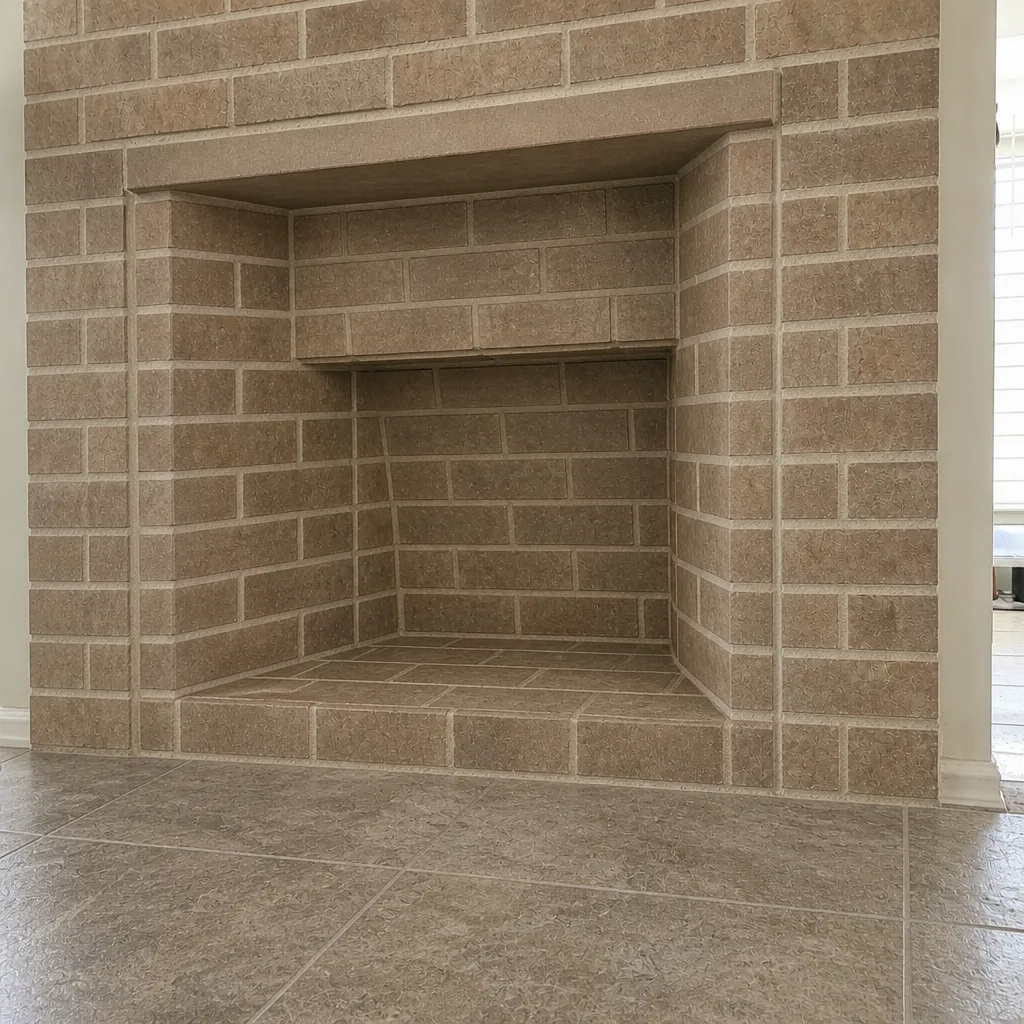
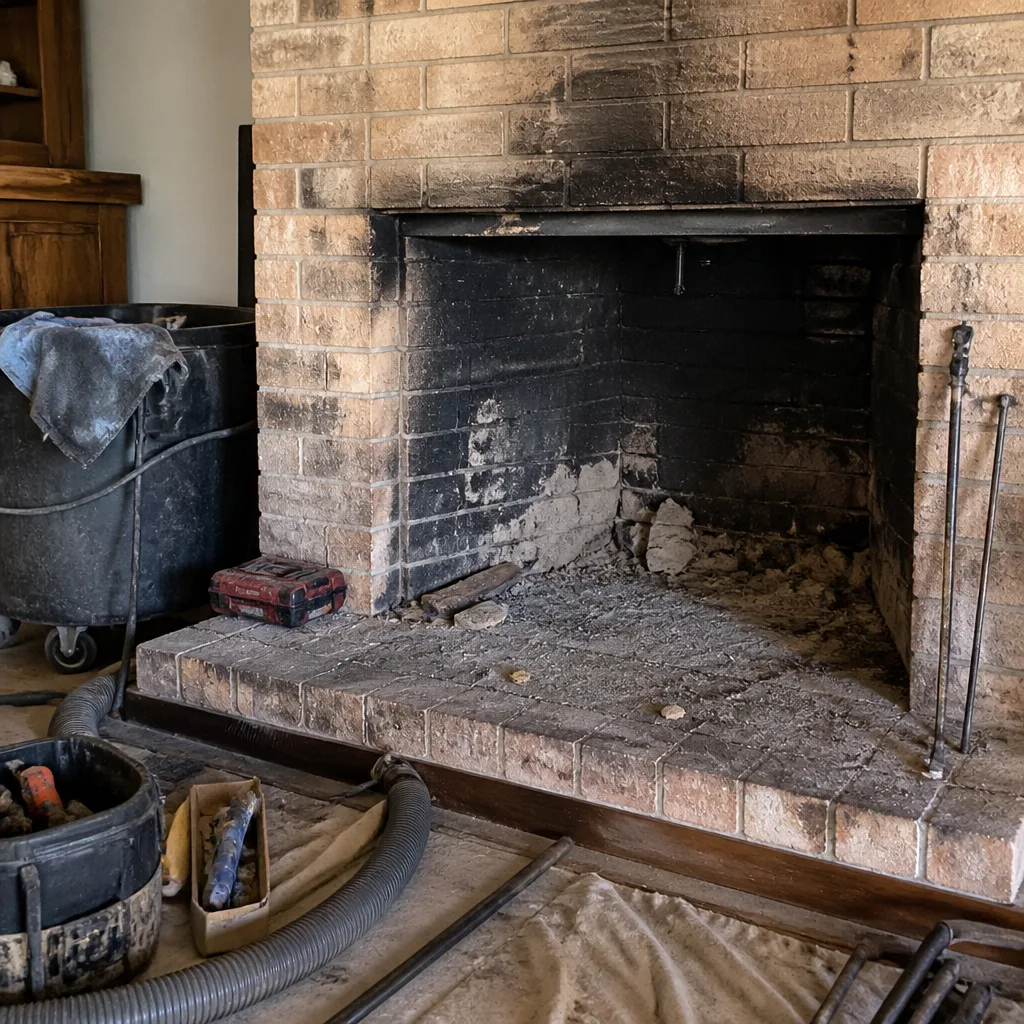
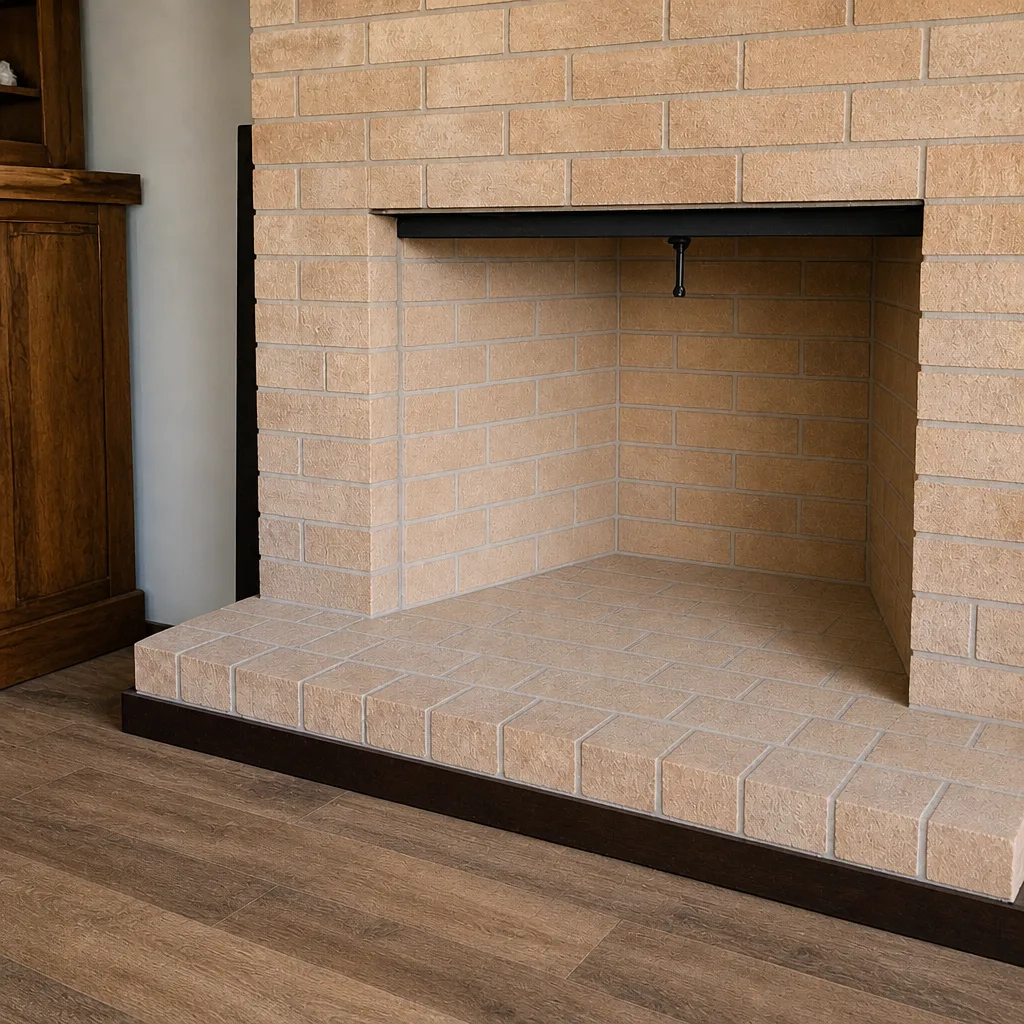
See the difference
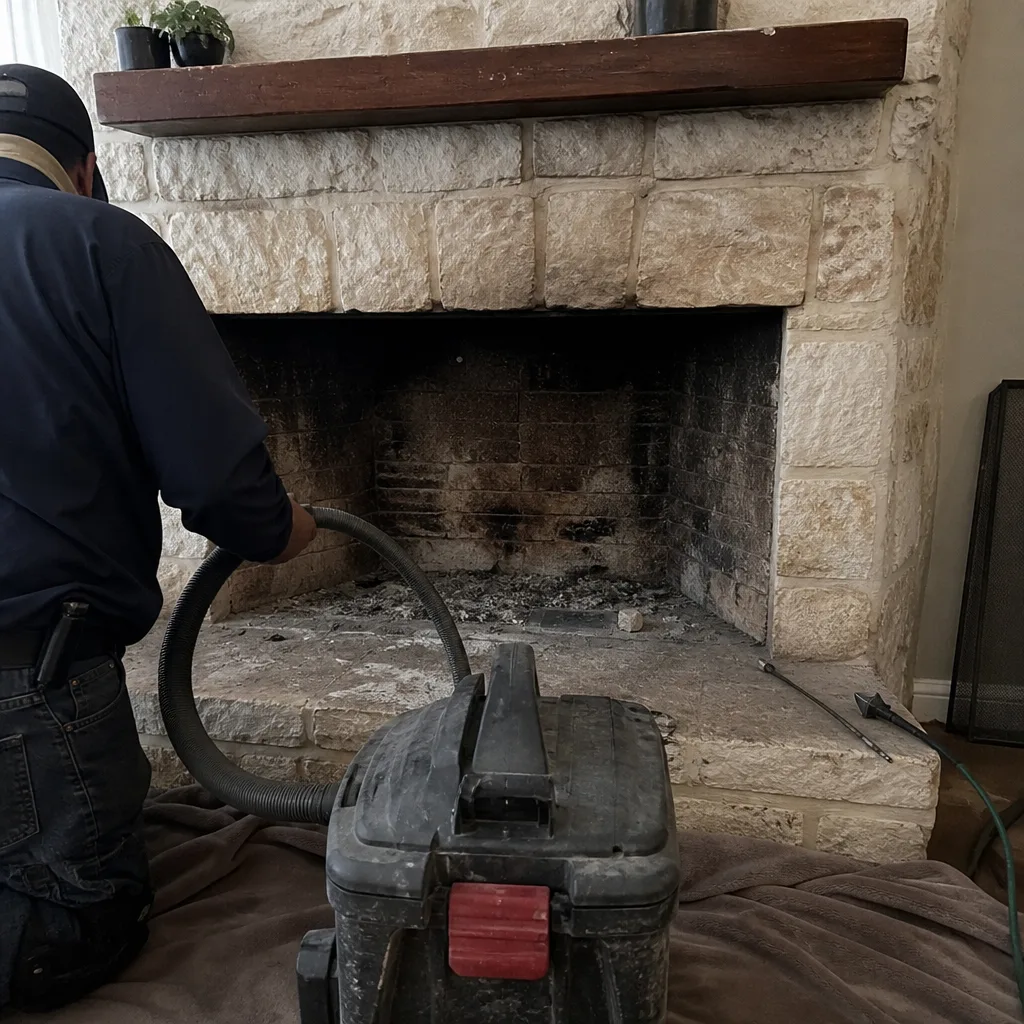 Before
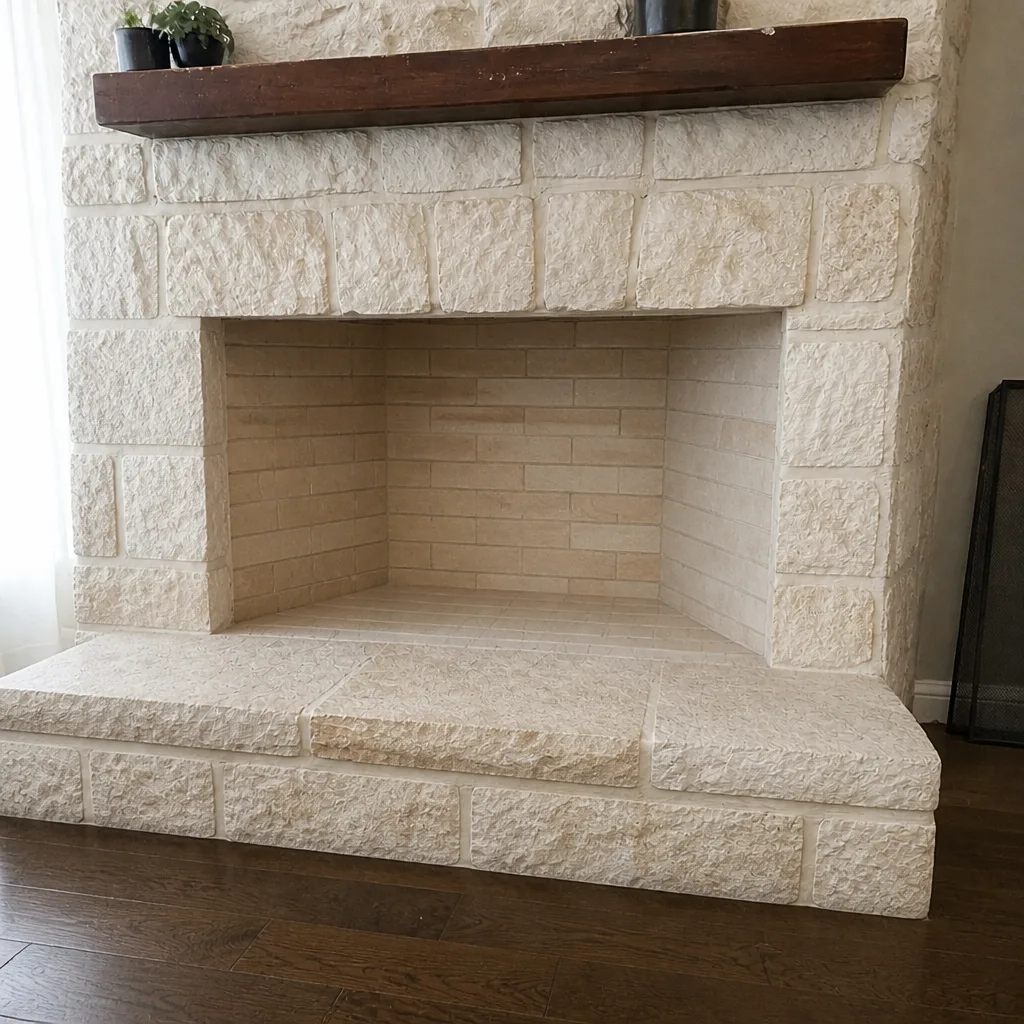 After
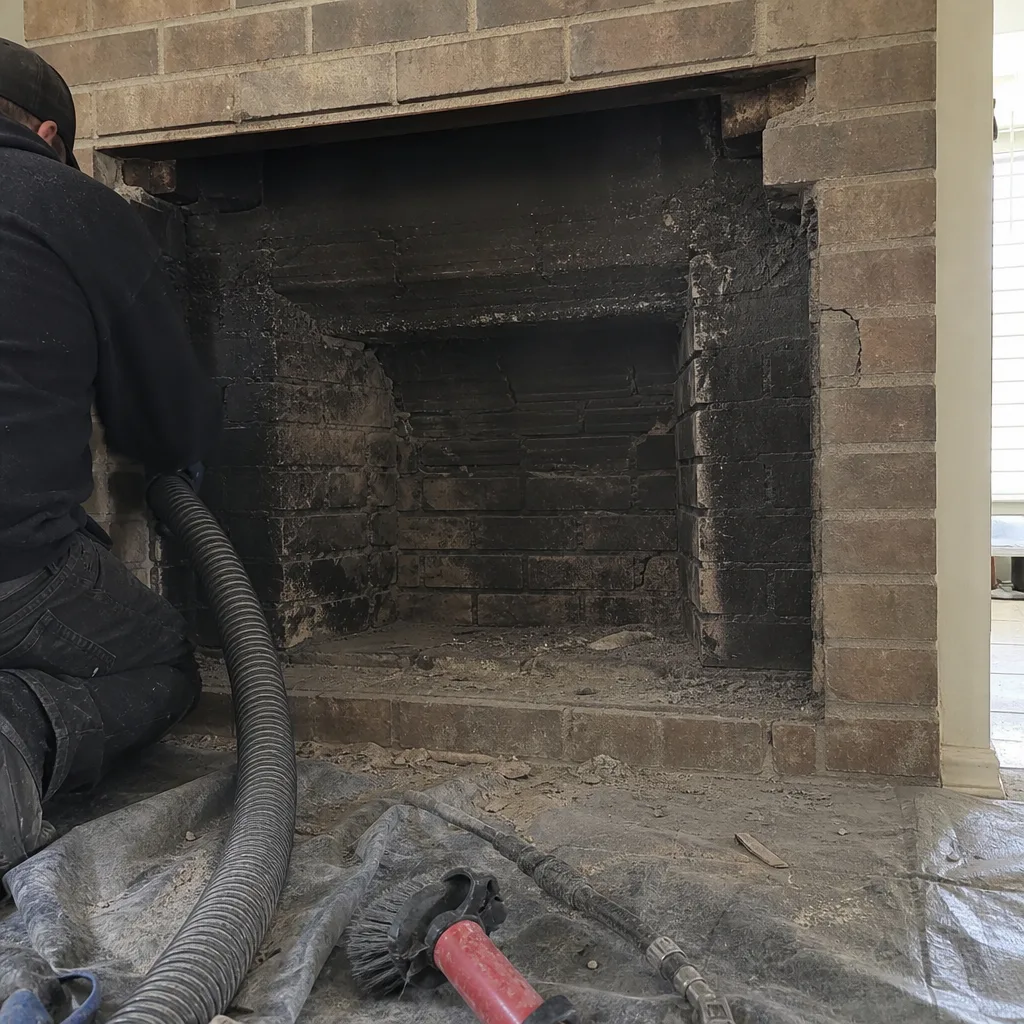 Before
 After
 Before
 After
When to Call a Professional
Call a sweep when you smell a tar-like or acrid creosote odor after shutdown, when your fire reverses mid-burn, when the residue on the firebox back wall has changed direction or darkened noticeably, when your damper sticks to the point where it doesn’t sit flush, when efflorescence has appeared on the exterior chase, or when your dryer is taking longer to dry a load than it did last season. Any one of these signs justifies a call. Two or more together means the system has crossed from normal wear into something that needs a formal inspection.
We’re careful about telling you what actually needs doing. We run a camera through the flue and document what we find, so you can see the evidence on the same screen we do. Sometimes the answer is that the chimney is in good shape and doesn’t need work. Sometimes it’s a sweep. Sometimes it’s a restorable flue using HeatShield ceramic resurfacing rather than a full reline, and we’ll tell you plainly which one fits. We don’t recommend work unless the camera shows it, and we name it specifically. Chimney Sweep Midland offers free estimates in Midland. Call (866) 942-7865 to book an inspection. We answer 24/7. Fast dispatch from 7am to 7pm, Sunday through Friday.
Frequently Asked Questions
The earliest signs are sluggish fire startup, a tar-like or acrid smell after the fire dies, dark residue creeping unevenly up the firebox back wall, and a damper that starts to stick. These appear weeks or months before smoke backs into the room. If you notice two or more together, book a sweep. Call (866) 942-7865 for an exact quote. Estimates are free.
Once a year is the standard for an actively used fireplace, and the end of burning season is the safest time to book it. Midland’s alkaline dust settles faster than in many climates, so a sticking damper or heavy back-wall residue can show up inside a single season. If you burn hard through the winter, ask the sweep at inspection whether annual is enough for your system. Call (866) 942-7865 to schedule.
A tar-like smell usually means stage two creosote, which needs more than a standard brush to remove. A sharp, acrid, acetone-like smell usually means stage three glazed creosote and needs a camera inspection before the next fire. Either one means calling a sweep. Estimates are free at (866) 942-7865.
White powdery staining is efflorescence, and it usually means moisture is entering the chase from a compromised cap or crown. In Midland’s wind-driven rain, a cracked cap is the common culprit. Check the cap from the ground first, then book an inspection. Call (866) 942-7865 and we’ll look at it with a camera.
Yes. A damper that sticks is showing the early stage of hinge wear, and once it stops sealing, smoke and heat escape up the flue even when the fireplace is closed. That wastes heat and lets creosote build on a cold flue. Get it looked at before it fails, not after. Call (866) 942-7865 for a free estimate.
Yes, and it’s a fire-safety service, not a cleaning chore. Lint accumulation in a dryer vent is a leading cause of residential fire, and Midland’s dust accelerates buildup at the exterior hood. Longer dry times and a hot laundry room are the signs to act on. Call (866) 942-7865 to book a dryer vent cleaning.
The Bottom Line
The warning signs that matter most in a Midland chimney are the ones visible weeks before the emergency: the way the fire draws, the smell after shutdown, the pattern on the firebox back wall, the bloom on the exterior chase, the sticking damper, the dryer taking longer to dry a load. Each one gives you a specific, checkable signal that tells you which stage the system is in and whether the fix is a cleaning or a repair. Reading them early changes the cost and the outcome. We’ve been serving Midland since 2011, and in our experience the homeowners who catch the early signs are the ones who never have the expensive repair conversation. If any of these warnings sound familiar, don’t wait for the next one to appear. Call (866) 942-7865. We answer 24/7. Fast dispatch from 7am to 7pm, Sunday through Friday. Estimates are free, and we show you the camera evidence before we recommend anything.
Written by the team at Chimney Sweep Midland, serving Midland since 2011.